So, it was brought to my attention that I was a bit of a dork. I'm obsessed with music and music history in what some people (*coughkevincough*....excuse me, something in my throat) consider an "unhealthy obsession". Sure, do I love experiencing music for all its richness? Yeah. Do I enjoy many different genres and appreciate the ones I'm not as fond of? Absolutely. Do I think something is missing from music today, not in its performance, but in its presentation? Yeah, but I couldn't figure it out until recently.
Apparently, though, I'm not the only one like that. Something I never thought I'd say again in my lifetime, but I'm more than ecstatic to shout it from the rooftops: LP (or for the younger generation - oh...my...God, I sound old as fuck! - vinyl records) sales, both units and dollars, have increased more than 120% from 2007 to 2008. This in an industry that has seen a contraction of about 25% year-to-year on its overall physical media (CDs, cassettes, music videos). While those promising numbers are nowhere near the figures posted by the virtual world (1.11 billion digital units to a measly 2.9 million LPs), this does represent a subtle change in how people want to hear the music, not just listen to it.
Let's go back to the beginning for just a moment. Thomas Alva Edison invented a bagillion things; everything from today's X-ray machine you find at your doctor's office to the stock ticker is thanks to him (and contrary to popular opinion, he didn't create the light bulb; he perfected it and made it long lasting so it could be mass-produced for consumption), as well as the "kinetoscope" (the precursor to the movie theater), the carbon telephone transmitter (the part you spoke into on corded phones...do people still have those?), and the electric generation plant.
However, one of his greatest inventions came about accidentally. He was looking for a way to record telegraphs so they could be "read" automatically and transmitted by telephone to the recipient - that an ingenious idea in and of itself - when he found a way to record and play back sounds instead of dashes and dots. There were other contraptions before his, but none were practical. His "graphophone" was born, consisting of a grooved tin-foil cylinder and a stylus. This later evolved, by other forward-thinking people, into the "phonograph", and for much of the 20th Century, it was the only way - other than live - most people would get their auditory pleasure. Whether it be in the form first depicted by RCA with Nipper listening intently to his master's voice (real dog, BTW) or the turntables attached to amps and equalizers of the '60s, the record, for intents and purposes, was king.
We became a car-crazed culture in the '50s and '60s with the new-found fortunes we had gained at the end of World War II, the advent of the Interstate Highway System, and Jack Kerouac's beatnik manifesto On the Road. We wanted to experience the wind in our hair, the sights not attainable on the old rural roads, and the unbridled feeling of being free - all while listening to our music. Sure, we had radios in our cars, but there were plenty of parts in this vast nation that simply didn't have the population to merit such expenditures like a radio station for people who would most likely never pay for their programming. Also, people wanted to create their own soundtrack, not one given to them across the airwaves. So, we tried everything we could to attach our beloved record players into our newly-beloved cars. When they managed to succeed, they failed. The major flaw with records: they skip sections of music when the stylus, which is on the record by pure gravity, loses contact with the vinyl.
Thus begins the dethroning of King Vinyl. Sure, it was slow and, as is always the case in situations where something as iconic as an LP loses practicality, not without backlash. The first practical attempt to make music portable came on the scene in 1964 with the 8-track. This was a popular medium for about 10 years, when the compact cassette - even though first developed before the 8-track in 1963 - burst onto the scene and chipped away at even the venerable LP.
By the mid '80s, the new kid - and new king, having overtaken LPs as the preferred medium of music for the first time since the days of Edison - on the block was now in danger of itself being overthrown by the threat called the compact disc. The CD was the ultimate in portability: high-quality digital sound, thinner size, and - for the first time - one-button pushing to jump from one song to the next. No more pushing fast forward and hitting play to see where you are if you reallllllllly need to listen to that certain song. The CD easily became champ in the early '90s, and stayed that way until the music industry found a way to eliminate the physical medium altogether: the MP3.
As I type this post, I'm listening to my iTunes right now (Yesterday by The Beatles just came on, and London Bridge by Fergie was just on, and All Your Reasons by Matchbox Twenty before that, in case you were curious), so I'm just as guilty as the next guy of buying into the digital media hype. In fact, digital music sales surpassed physical media two years ago for the first time and it continues to explode. The reasons are justified: iPods and other players are cheaper and more prevalent than just 5 years ago, instant gratification of having "that song", and no longer are you chained to buy the whole album - or pay the insane price for CD singles - if you only like one song. However, with all digital media, something magical is lost.
That something is the sound quality and the fidelity. Where the MP3 - and even, to a lesser extent, the CD and cassette - lacks is a process to make the music readable called "compression". It's not an evil plot by the music industry to sabotage the consumer, but in order for you to hear it with any clarity, some of the fidelity is lost. Instruments and sounds are lost in the translation, and it can cause the song to not be heard as it was intended. It's the biggest limitation with the digital format, and the reason vinyl did not, as predicted, die.
This phenomenon proves that LPs are still a viable media. For their clarity and richness, LPs are here to stay, even as a niche. However, all three (excluding the nearly-departed cassette) mediums are, despite their outward appearance of competition, complimentary to each other as all of them serve a specific purpose. LPs are great for their sound and, nowadays, nostalgia and novelty, but unless you want to listen to an entire album start to finish or go to the turntable after every song and try to find the hard-to-see "gaps" signifying the end of one track and the beginning of another, they're not practical.
CDs are great for making up those short-comings, and they're both recordable and portable, too. As any college kid or teenager can attest, road trips are naturally more fun with a stack of CDs; plus, they sound the best in a car since most car audio systems are built today specifically to account for the acoustics needed for CDs. Their drawback is while portable, they're not meant for physical activities like running, hiking, or anything involving great human exertion, since the CD, like the LP, can skip if mishandled.
MP3, while having the worst sound of the three, is the most convenient. You can have seemingly endless playlists with any combination of music you would like and, with a music player, take it anywhere you go. No need to worry about jogging too hard and causing a skip, as it's all digital now. But, what is gained in utility is lost in playback (as discussed above).
I own about 140 CDs and over 1400 MP3s (about 500 or so are from said CDs), and plan on investing in a turntable soon. Do I own any records? No, but with all the garage sales lately with people trying to make ends meet, I can help my fellow neighbors by taking their (gently-used) vinyl off their hands. Also, stores like FYE and Best Buy are getting back in the LP game, with a surprising amount of new titles available on vinyl. (However, buy local and support your local record store; Google it if you don't know where they are. They have great deals, up-to-date selections, and are super-knowledgable on all genres.) Personally, I will only buy LPs I know I would listen to in entirety, but that doesn't mean you should take my advice on that. Hell, if I find Rhythm of Youth for $1 somewhere, I'd spend it just to see if my friends really do dance.
Hi everyone! How've you been? Yeah, I suck as a friend and at anything involving ambition as evidenced by the lack of a blog posting in more than a week. Blame it on my annoyance with computers after being at work on one for 9 hours straight, my constant lack of ideas, or something else, but I resolve to do a little better. It may not be as gung-ho as I planned on - once a day - but I'm going to do one at least 2 or 3 times a week. One day, I'll get back on track. But until then, you'll just have to deal with it.
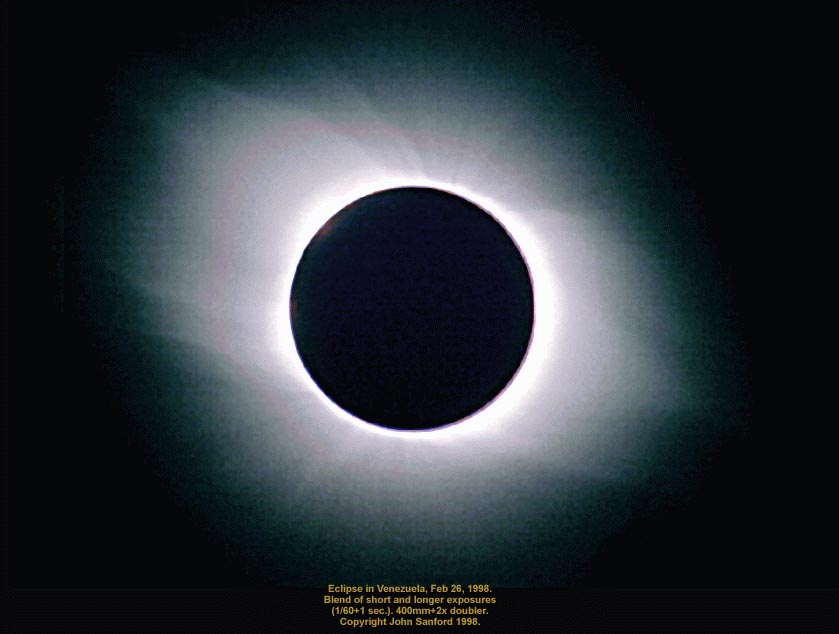
You read that right, ladies and gentlemen; it is believed that, because the Moon separates the Earth from the Sun for any length of time, gravity's hold on us is less than normal. "Old wives' tale" or "nut-job conspiracy theorists" is probably your first thought, as it was mine, despite the fact it made it into one of the most-respected papers in the history of the world. "Must be a fluke, I thought," much like the numerous times a caller "Baba Booey-ed" FOX News. However, I did my homework and found this isn't the first time this was suggested; in fact, it's been suggested since at least the '50s that pendulums are affected by the total eclipse. Apparently, the pendulum changes direction violently during a total solar eclipse, and the theory goes as such: since gravity is constantly pulling the pendulum toward the Earth, that constant struggle between gravity and Newton's laws is what keeps it swinging in the first place; because of this, gravity - it seems - must be the culprit to cause those outbursts.
(Side rant: since the most scientific-type of pendulum swings based on a combination all three of Newton's laws of physics and his postulation of gravity, it's a pity it's named after some French guy who used Newton's ideas to come up with the idea the Earth rotates - in 1851, about 2000 years after Ptolmey and Hipparchus figured it out (just so the stupid and brash Europeans could become feudal lords and serfs and forget it until Galileo rediscovered it for them in the early 1600's; thankfully, though, the Indians and Arabs archived those works so they could focus on other things during the Medieval phase, like the concept of zero, perfecting algebra, and universities.) without anyone telling them. Anyway, back to your reguarly scheduled post.)
So, this has lead to the largest test of that theory to date. Hundreds of test sites are set up all over China throughout the "eclipse zone", all with both gravimeters and, in case they don't work like in 1999, backup Foucault pendulums. Since this will be a six-and-a-half minute eclipse, the longest we'll ever experience in our lifetimes, it should be sufficient time to figure out, once and for all, if that light-headedness you experience while day turns into night isn't just you and it really is your head trying to separate from your body.
Therefore, if you're looking for an excuse to not go into work on Wednesday, you can always say you've Velcro'ed yourself to your bed so you don't float off into space. In fact, you can even forward them the link to the story showing it's not just hogwash. However, be forewarned that if your boss has at least some common sense, they'll know the gravity-challenged area of the Earth will be on the other side of the globe from your cushy desk job in Center City and won't buy it for a minute. But let me know if it works; I'll use it for the next total eclipse in July 2010, when it's at least in the Western Hemisphere (Chile and Argentina, in case you were wondering), if they do buy it.
I've been scarce lately. It's not intentional, as I truly do want to write for the 4 people that have bookmarked my page, as well as myself. However, I really am at a loss lately for topics to discuss. I don't want my blog to be a regurgitation of other blogs, which in and of themselves are also regurgitations of others blogs. I don't want to be an RSS-proxy of news topics, either. As my orange juice post shows, I can find (relatively) fresh and original ideas to talk about. In spite of that, I am at a loss lately.
So, it's time for more (in deep movie announcer voice) "audience participation-tion-tion-tion!" With that in mind, what topics can you think of for your man Jimbo? The only rule is it has to have some connection to the Delaware Valley, the Tampa Bay area, and/or baseball. Hopefully, you guys can throw some stuff my way soon!
So, yesterday was our Independence Day. It's a day when we celebrate becoming the first long-lasting democracy in the world since the Roman Republic was dissolved in favor of making Gaius Julius Caesar dictator perpetuo. Sure, there were other attempts at a government "by the people, for the people," or societies that had some qualities of democracy between 41 BC and 1776 AD, but none of them gave such broad freedoms* to every citizen† as the founding fathers eventually did. But contrary to popular opinion, the Declaration of Independence didn't give us our freedoms; it was more of a complaint-laden diatribe against His Highness, the mentally unstable George III of the UK, and why we needed to kick his government to the curb. The Constitution codified those "truths" we held "to be self-evident;" the Declaration was just the jumping point to plant the seeds of freedom. (*-the right to vote limited to only White men 21+ years old until 1865 for all races, until 1920 for women, and until 1971 for 18+ year olds; †-3/5 of a citizen if you were Black or Indian before 1865)
Obviously, freedom didn't come easy, nor was it free from speed bumps. It took a long time to get the hang of this "American experiment" known as a federal democracy. The original idea - and the core argument behind the Civil War - was each State had precedent over the central government; this philosophy was endorsed in the Articles of Confederation. Needless to say, that failed, as we have the Constitution today. Then, the southern states tried to persuade Washington that was still the original intent of the rewritten Constitution and its 10th Amendment:
The powers not delegated to the United States by the Constitution, nor prohibited by it to the States, are reserved to the States respectively, or to the people.
South Carolina decided that meant if it's not covered in the Constitution explicitly it was up the States to decide (i.e., slaves and secession). Well, that really didn't turn out how Columbia thought it would when Abraham Lincoln called their bluff, did it? It took four years and over 600,000 lives, but the power of the Union - and of the Constitution - remained in tact. Also, an interesting caveat came of it; the formation of a new state from an existing one. West Virginia remains, to this day, the only state formed because of a war.
Maine and Kentucky, however, were carved out of existing states without bloodshed. Kentucky asked the Virginia Assembly and the US House for permission to form its own government and control its own destiny, and permission was given; Maine came about due to the Missouri Compromise so the "Slave States" and "Free States" had the same power in the Senate, but more-or-less, it was the same premise - state wanted self-determination and luck had it they were more needed than they thought. So, it has been done in US history; it's not an unprecedented events by any means, though it is hard to do for sure.
So, in that same spirit, why is it every time either South Jersey or South Florida talk of secession from their states, they are laughed off - by the governor himself, no less? These are people who are seriously expressing their displeasure with their governments and - in the case of South Jersey - how they are represented in the Assembly. Culturally and economically, they are a world away from their counterparts in the north and it's time for them to be allowed to govern themselves.
South Jersey constitutes the counties of (from north to south) Camden, Gloucester, Atlantic, Salem, Cumberland, and Cape May. (Side note: I would be tempted to include Burlington and Ocean counties, as well, but a friend of mine from Ocean County considers himself to be from "Central Jersey", and using that logic, the people from Ocean and Burlington would be less likely to vote for such a proposal.) South Jersey could make its temporary capital in Glassboro (since it has the foreign policy experience and the state university, as well as plenty of access to the rest of the new state with Route 55 and US 322), with a possible move in the future to a more-centrally located built-from-the-ground-up city in either Salem or Cumberland counties.
South Florida, though different from some proposals, would be from the following counties southward: Citrus, Sumter, Lake, Seminole, Orange, and Brevard. The capital pro tempore would need to be either Port Charlotte or Vero Beach, as not to give any one city a political advantage over another (which is why Tallahassee was chosen, even though it is over 600 driving miles from its furthest in-state city, Key West). At some point, a new capital would need to be built more centrally - like near Lake Placid - but only when infrastructure could support it.
Now is the time to rise up and push these movements to fruition. The French didn't let the monarchy run them forever, the Mexicans didn't stay under Spanish rule, and the Indians threw the British out of their land. On this Independence Weekend 2009, let's exhibit the most basic of fundamental human rights, it's the first one they thought of when amending the Constitution: the freedom to protest peacefully. Remember, as Thomas Jefferson once said, "When the people fear their government, there is tyranny; when the government fears the people, there is liberty." Let's help the government remember that - non-violently, of course; I'll never condone that - in a democracy, we're in control. We want our own states and will do what we can to get them! Enough of being North Jersey's bitch and North Florida's bankroll! It's our time - it's our turn!
OK, if you read through my political rhetoric that long, you deserve a reward. Happy Independence Day everyone!
So, I’ve had a terrible case of “writer’s block”, which is why I haven’t posted on this blog since my observation on the Supreme Court of Public Opinion case #2009-0618, People for the Ethical Treatment of Animals, musca domestica, et. al. vs. Barack H. Obama, President of the United States. Sometimes, however, life has a funny way of dropping something so pertinent to you right on your lap you’d be insane not to approach it. Thus, let me finish this paragraph by stating this: Kevin, I know you and I strongly recommend you look away from the rest of this blog now – you know what’s coming.
Tropicana Field: loathe it or love it, it is the home of the Tampa Bay Rays; has hosted, among others in its 19-year history, the following large-scale events: the largest one-night indoor concert in Florida, NCAA Men’s Final Four, the Davis Cup, the NHL Playoffs, ArenaBowl IX, and – oh yeah – the World Series; and, contrary to popular opinion, is centrally located near the population center of the Bay Area. So, why is it people can pack the Trop when it’s a “gala event” (like the playoffs, the World Series, or the raising of the banners), but when – God-forbid – you need to actually watch the game and not just sit in a seat and take pictures to say, “Look where I was!” the sea of blue you see on TV is not people, but empty seats? What possesses the people of Florida – not just Tampa Bay, as the same phenomenon is occurring in both Miami and Jacksonville – to be apathetic toward something so community-driven that other cities would kill to have?
Let’s first take a look at some of the excuses and see if they can’t be debunked. The biggest excuse that people – mainly from Tampa and to the northeast – have is the time and distance. As a St. Pete resident of 6 years, I can safely say that argument is a load of crap. The worst direction to travel during either rush hour is toward Tampa. The bridges feed into Tampa’s overworked, outdated road system that can’t handle normal everyday traffic. Add the 5-10,000 extra vehicles that will appear on the Howard Frankland, Gandy, or Courtney Campbell bridges during that rush – in which most games are played, and no one would make it leaving at 5:30pm from Pinellas to the stadium, irregardless of the placement in the city, by opening pitch without pushing start times past 7:30pm; it will be near impossible to have Bob DuPry’s office to sign off on that. So, until TBARTA gets going, no place in the area will be convenient enough for everyone.
Speaking of TBARTA, the next issue is its location in general. Having been built in downtown St. Pete, which most consider “isolated” from the area since it’s on a peninsula, makes it that much more impossible to break that impervious across Tampa Bay known as the Hillsborough/Pinellas county line. However, a new study the ABC Coalition published today in the St. Petersburg Times shows 5 different locations and the population within 30 miles of each. Downtown St. Pete has the least, but at 2,245,129, it is within 100,000 of the “top spot”, Downtown Tampa. Also, with TBARTA planning to build a transportation hub right near the Trop location that will make it easily accessible by rail from Clearwater, Tampa, Brandon, Plant City, Wesley Chapel, and possibly New Port Richey, and express busses from northern Pinellas, Bradenton, Sarasota, Brooksville, Crystal River, Lakeland, and all points in between, Downtown St. Pete just became that much more attractive. Granted, it’ll take 5 years – if started today – for the first signs of TBARTA’s impact, but seeing as it takes 3-4 years to build a stadium when you don’t have a billion dollars to throw around like the Yankees and Mets, you need to consider those transportation nodes in the final decision of stadium location.
While we’re talking bottomless bank rolls, let’s talk another favorite topic: dollars and “sense”. Everyone said the original deal to put it on the waterfront for $450 million was “too expensive.” However, those same people arguing it will cost too much also want a $471 million rehab of Tropicana Field. To that I quote Carlos Mencia: “DEE-Dee-dee!!!” Thanks for “protecting our wallets” on that one, POWW. So, according to citizens of Tampa, it either needs to be in Tampa, since it’s the “population center” (which it’s geographically not; including Bradenton and Sarasota, that distinction belongs about 83rd Ave N and 4th St N in St. Pete), or at the very north end of St. Pete so people from Tampa “don’t need to drive as far.” However, there’s no city- or county-owned land up in the Gateway area, as that area of St. Pete is known, that doesn’t require mitigation; same goes with Tampa. So, if Tampa or Gateway are the “prime spots,” why would we up the price of the stadium by up to $150 million in land acquisition and/or landfill mitigation costs just to kowtow to the demands of an extra 100,000? I don’t know about you, but an investment of up to $1.5 million per person for people who may never go to a game seems like wasted money.
Another issue is the play on the field. “Why should I support a team that is barely over .500?” I’ll give you one major reason why: we went to the World Series last year. How’s that for a “what have you done for me lately” retort? They have a winning record! They’re playing surprisingly well in spite of major injuries that took out, for some length of time, the following people (in no particular order): Chad Bradford, Scott Kazmir, Troy Percival, Jason Isringhausen, Jason Bartlett, Aki Iwamura, Evan Longoria, and Pat Burrell (I’m sure I forgot some along the way, too). That’s almost a whole freakin’ team on the DL! Yet they’re three games over .500 – something that would have seemed like a Godsend 2 years ago – and are still within reach of the AL East crown. Granted, in every other division, 38-35 would be good enough for at least 3rd (2nd in the AL Central and NL East), but this isn’t every other division, and I think that’s why the fans are very fickle. However, it’s not excuse. Here’s a list of teams with worse records than us (as of Wednesday) that have better attendance averages (in order of attendance, records and place in division in parentheses): Cubs (34-34, 3rd), Mets (36-34, 2nd), Astros (32-37, 5th), Rockies (37-35, 3rd), Mariners (36-35, 3rd), Twins (36-37, 2nd), D-Backs (30-42, 5th), Braves (34-37, 4th), White Sox (34-37, 3rd), Padres (31-39, 4th), Reds (34-36, 3rd), and Royals (31-39, 4th). In fact, we are one of only two teams that have winning records that are in the bottom 20 – the other being the Marlins (37-36, 3rd) at 29th. See? It’s not just Tampa Bay with the attendance issues.
And that brings me to the bigger issue: are we, as Phloridians (again, my blog, my spelling rules), apathetic to sports in general? The only team that has had no attendance issues anywhere in Phlorida was the Tampa Bay Buccaneers, but that’s about to change with the loss of most of the season ticket holders due to the economy. So what is the root cause of it? What would create such an indifference to teams and franchises that areas like San Antonio, Portland, Hampton Roads, and especially Las Vegas are pushing hard to secure? Do we just, like the sun, sand, and surf, take them for granted that they’ll always be here? Or is it more of an inherent issue? I can honestly see the problem with hockey as a whole in the Sunshine State, as there is no history or pedigree throughout history here (one Stanley Cup doesn’t erase 70 years of isolation from the sport). However, football should be huge here, and it is: at the college level. The pro teams are struggling to fill seats; the Jags are on the verge of moving to Toronto (!) if revenue doesn’t pick back up, and with no naming rights to Jacksonville Municipal Stadium, I don’t foresee that happening in the near-term. The Dolphins are struggling in a tough division and can’t get enough people in the seats to expand the payroll and get better players. The Bucs’ waiting list evaporated almost overnight, and now they’re soliciting me to get a ticket package (just because I’m a Rays’ holder doesn’t mean I would support the team that embarrassed the Eagles in Philly twice in one year’s time). Baseball also has a long, storied history here, but mainly through Spring Training. But the excitement of March seems to quickly wear off as the attention spans of the natives get bored and move to the next big thing.
From this writer’s perspective, it seems like the main issue is Phlorida’s ingrained obsession with vanity. They do what they can, however they can, to be noticed. Look at South Beach as a prime example. In and of itself, it’s nothing more than a very nice beach town found at any oceanfront state (the Hamptons in New York, Avalon in New Jersey, Nags Head in North Carolina, Myrtle Beach in South Carolina, amongst many others). However, the rich and famous hang out there, songs like “Miami” by Will Smith celebrate it, and TV shows like “Burn Notice” make it a living, breathing character along side the cast. That’s why people feel the need to go to South Beach; not because the sand is made of gold or it houses the Fountain of Youth, but because they can be seen. Clearwater Beach has just as nice – if not better – beaches, and there’s just as much money in those condos as the condos on the other side of the state, but it’s not as glorified. Why? Because no one will see you there except for that tourist from Montreal. That’s why the Rays can sell out the playoffs, but can’t get rid of tickets for a World Series rematch. That’s why the Lightning set attendance records at the Thunderdome (now known as Tropicana Field) during the playoffs, but can’t get more than 7,000 people to attend an average game at the Forum (neé Ice Palace). That’s why the Jaguars haven’t sold out a game in almost a year, and the Magic, on their historic playoff run, couldn’t get a full house until the Finals. Unless people will notice you, Phloridians just can’t waste their time with trivialities like sports. But then, this argument doesn’t hold much water when, in California, the geographical center of vanity, the Dodgers and Lakers sell out games constantly, does it?
So, what is it? Why are sports as a whole, not just the Rays and their red-headed adopted son known as the Trop, neglected in this state? Why can a meaningless Spring Training series between the Rays and the Phillies in Philadelphia sell out (about 90K people over two games), but the same series in St. Pete with both teams fighting for position in their respective division can’t draw more than 60K people for three? What makes people spend more time in a bikini or swim trunks getting the early stages of melanoma instead of spending money on organizations that provide money and supplies to both youth and adult non-profit organizations alike? Why do we, as a state, demand new facilities and/or locations for these teams, only to shun them the same way we did before with the same tired excuses, just amended to fit the new situation?
As someone who loves sports, I can’t understand it. All I can understand is no matter where the Rays new stadium is built, be it Tampa, Downtown St. Pete, or an island in the middle of Tampa Bay with off ramps right off the Howard Frankland and hydrofoils from locations every 2 miles along the bay’s shoreline for those who don’t want to drive, some group will complain about the distance, the money, the team’s performance; you know, the same excuses that have been used for years. And that’s just how Phlorida is; nothing changes, no matter how many people you try to cater to.

 This in an industry that has seen a contraction of about 25% year-to-year on its overall physical media (CDs, cassettes, music videos). While those promising numbers are nowhere near the figures posted by the virtual world (1.11 billion digital units to a measly 2.9 million LPs), this does represent a subtle change in how people want to hear the music, not just listen to it.
 Let's go back to the beginning for just a moment. Thomas Alva Edison invented a bagillion things; everything from today's X-ray machine you find at your doctor's office to the stock ticker is thanks to him (and contrary to popular opinion, he didn't create the light bulb; he perfected it and made it long lasting so it could be mass-produced for consumption), as well as the "kinetoscope" (the precursor to the movie theater), the carbon telephone transmitter (the part you spoke into on corded phones...do people still have those?), and the electric generation plant.
 He was looking for a way to record telegraphs so they could be "read" automatically and transmitted by telephone to the recipient - that an ingenious idea in and of itself - when he found a way to record and play back sounds instead of dashes and dots. There were other contraptions before his, but none were practical. His "graphophone" was born, consisting of a grooved tin-foil cylinder and a stylus. This later evolved, by other forward-thinking people, into the "phonograph", and for much of the 20th Century, it was the only way - other than live - most people would get their auditory pleasure. Whether it be in the form first depicted by RCA with Nipper listening intently to his master's voice (real dog, BTW) or the turntables attached to amps and equalizers of the '60s, the record, for intents and purposes, was king.
 We wanted to experience the wind in our hair, the sights not attainable on the old rural roads, and the unbridled feeling of being free - all while listening to our music. Sure, we had radios in our cars, but there were plenty of parts in this vast nation that simply didn't have the population to merit such expenditures like a radio station for people who would most likely never pay for their programming. Also, people wanted to create their own soundtrack, not one given to them across the airwaves. So, we tried everything we could to attach our beloved record players into our newly-beloved cars. When they managed to succeed, they failed. The major flaw with records: they skip sections of music when the stylus, which is on the record by pure gravity, loses contact with the vinyl.
 CDs are great for making up those short-comings, and they're both recordable and portable, too. As any college kid or teenager can attest, road trips are naturally more fun with a stack of CDs; plus, they sound the best in a car since most car audio systems are built today specifically to account for the acoustics needed for CDs. Their drawback is while portable, they're not meant for physical activities like running, hiking, or anything involving great human exertion, since the CD, like the LP, can skip if mishandled.
 MP3, while having the worst sound of the three, is the most convenient. You can have seemingly endless playlists with any combination of music you would like and, with a music player, take it anywhere you go. No need to worry about jogging too hard and causing a skip, as it's all digital now. But, what is gained in utility is lost in playback (as discussed above).